Posts

Showing posts with the label Food and Beverage

Scaling Your Business through Partnership

Image
I recently had the privilege of attending an educational workshop as part of the Oregon Entrepreneurs Network (OEN) Angel Food Conference and Education Series 2019 . The workshop centered on the topic of scaling up businesses in the food and beverage sector. Being a food science graduate and getting to work in food and beverage related patents, I was excited to learn about challenges for food and beverage businesses as they begin to grow. Discussion ranged from production to distribution to financing. No matter the topic, however, one of the central themes was finding partners that are the right fit for the various growth stages of your business. These partners come in many forms, such as mentors, employees, co-packers, distributors, and financial institutions. And these partners can further include intellectual property (IP) counsel. Finding IP counsel that understands your business and how to serve your business as it grows is an invaluable asset. The right IP partners can hel...

Diversity in Patent Drafting

Image
My Thanksgivings growing up were potluck-style, my family bringing traditional Persian foods, my aunt’s family bringing traditional Filipino foods, and everyone doing their best imitation on traditional Thanksgiving dishes. I’ve found that using a similar mindset can greatly improve patent drafting and prosecution. Unlike a more traditional patent law firm model where applications in a specific field are drafted by an individual who only works in that field, I’ve been exposed to different approaches with patent technology specialists having diverse backgrounds working with experienced attorneys who practice in a wide range of technologies.  Why can this be advantageous? Patent drafting inevitably requires some amount of learning. Inventions are, by definition, new and anyone other than the inventors is not an expert. Traditional firms might think it is beneficial to assign these inventions only to attorneys and/or agents considered experts in a particular field that seems ...

Skim Milk

Image
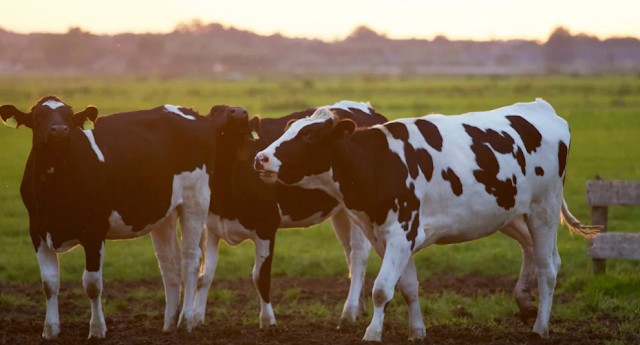
Obesity is an epidemic in many countries, including America, resulting from a lack of exercise and poor diet. Commonly, people are happier when they exercise and eat right, not to mention their vitals (BP, HR, etc.) change to more desirable values. This logic applies to household pets as well; dogs are happier and healthier when sufficiently walked and fed appropriately. Therefore, it is safe to assume that livestock, such as cows, would also be happier when provided with a medium for exercise. However, cows are naturally dormant animals that enjoying grazing and relaxing. Commonly, farmers, whether dairy or cattle, arrange drinking water for the cows far away from their food, thereby forcing the cows to walk. However, this requires a large plot of land that could be utilized in other ways. Large animal veterinarian, Arlan Smith, realized that animal husbandry costs may be reduced by providing a treadmill shaped to accommodate a cow. He claims that a variety of bovine probl...

Making Every Cocktail Neat and Perfect

Image
Learning cocktail making, as with many hobbies, has an inherent barrier to novices guarded by vexing terminology. What does it mean to “muddle” something? Is a “dash” the same amount as a “splash?” How can a cocktail be “dry?” Combined with an array of intimidating contraptions and an overwhelming abundance of complex, multistep recipes, it may be tempting to head out to the bar and put home mixology on the rocks. Somabar® and other companies are seeking to change that. In the age of instant and facile domestic comfort led by smart home technologies, one patentable space remains sparse – the automated home cocktail maker. As can be surmised by anyone who has been to a novelty robot bar, automated cocktail making is known. For example, Smart Bar USA claims to market “the world’s first patented touch-screen bar and automated cocktail dispenser” (see U.S. Patent No. 8,584,900, wherein the inventors recognize “a lack of the ability to provide mixed alcohol drinks” via the beverage d...

Reefer Madness

Image
The burgeoning marijuana industry is witnessing incredible growth as the previously forbidden fruit becomes legal in an increasing number of states.  While the public is quick to adopt its legalization, other sectors are slow to adapt and the USPTO is no exception.               Early internet patents predicting various ways in which the internet would be used are now viewed as overly broad and the USPTO has swung the pendulum in the opposite direction (hello Section 101 rejections). Marijuana patents appear to be in a similar phase; it’s hard to say what is overly broad for a new product.  However, unlike the internet, marijuana has been known and tested, with many experiments occurring in the last century.  This presents an interesting issue - companies may patent previously known compositions, strands, and the like with little consequence, for now, as documentation of marijuana experimentation was ...

The Early Filer Gets the Poke

Image
As poke restaurants grow in popularity across the United States, trademark conflicts have been rising to the surface. For example, “Aloha Poke Holdings LLC” out of Chicago, IL, known as “Aloha Poke Co” has already been granted a trademark on the words “Aloha Poke”.             The Chicago-based poke company has wasted no time in defending their mark against competitors using “Aloha” or “Aloha Poke” in their name or marketing. At least one Washington-based company has already opted to change their name in response to a cease and desist letter from “Aloha Poke Holdings LLC”. Considering the close tie between the words “aloha” and “poke”, there are likely to be many other poke restaurants that will fall under fire.             However, although “Aloha Poke Co” has been winning battles in defending their trademark, there has already been some negative PR over their aggressive protection for use of the wo...

Food and Beverage IP Still Highly Competitive Part II

Image
There are many cases where a company may choose to file continuation applications. For example, in the food and beverage industry, a parent application may be directed towards a system for packaging food, and then a continuation application may have coverage on a method for packaging the food. This approach may have advantages for obtaining patent coverage on various aspects of an invention, while maintaining the benefit of an earlier filing date.             As shown in the recent Nestle USA, INC. v. STEUBEN FOODS, INC. case, it is important to keep in mind that continuation applications may be subject to similar interpretation as related patent applications.             In particular, a decision was recently rendered in favor of Nestlé with regards to an aseptic food packaging patent to Steuben Foods, Inc. (U.S. Pat. No. 6,481,468 B1).       ...

Food and Beverage IP Still Highly Competitive Part I

Image
A decision was recently issued at the Federal circuit level in a case between Nestlé Healthcare Nutrition, Inc. (Appellant) v. Steuben Foods, Inc. (Appellee). In the case, Nestlé attempted to invalidate a patent to Steuben Foods, Inc. directed towards systems for aseptic packaging of food products.             The arguments submitted by Nestlé primarily asserted that Steuben Foods, Inc. improperly relitigated issues directed to the meaning of “aseptic” that were resolved in related patents.             Ultimately, the decision upon appeal was in favor of Nestlé to remand and carry out further proceedings, as collateral estoppel should have precluded relitigatation of the term “aseptic”. Therefore, it is still to be determined whether or not Steuben Foods, Inc. will be able to retain their patent rights.             In a...

Pabst and MillerCoors Taking It to Trial This Fall

Image
Pabst Brewing and MillerCoors have been in a legal dispute over an impending 2020 contract renewal and will go to trial this November according to CNBC.             MillerCoors has brewed for Pabst under contract for many years, making well-known Pabst beers such as Pabst Blue Ribbon (PBR).  However, MillerCoors may terminate their contract with Pabst in 2020, citing potential capacity issues.             Pabst has a lot to lose and has already begun to fight hard against contract termination by MillerCoors. Among the potential losses for Pabst are intellectual property rights. Specifically, the trademark system is a use it or lose it system in the U.S., and Pabst could be at risk of losing trademark protection if marks go unused for too long.             That being the case, if the contract with MillerCoors is ter...

Coca-Cola Re-Imagines the Life Cycle of Citrus Products

Image
            Re-purposing by-products is common in the food and beverage industry to both reduce waste and create additional value added products.             However, Coca-Cola has gone one step further, recognizing that a citrus processing by-product may be used to make animal feed, and that a fiber by-product from making the animal feed may be extracted for use in paper products. Basically, Coca-Cola obtained a patent (U.S. Pat. No. 9,909,260) directed towards a method for using by-products of goods made from by-products.             It goes to show that, with a little creativity, the life cycle of raw materials may extend far beyond their original use.

From Brewers to Bakers

Image
            Finding creative outlets for food waste streams has spurred innovation for repurposing by-products in ways that make both environmental and business sense in recent years.             Take the brewing industry, for example. For every gallon of beer, approximately 10 pounds of spent grain is generated. This means that in Oregon alone, about 190 million pounds of spent grain is generated a year.             Previously, spent grain had primarily been used for agricultural purposes. However, as efforts have been increased to find more uses for by-products, upcycled spent grain has been used to make anything from beer packaging to dog treats. One company in the business of upcycled spent grain is Rise Products, Inc., a company which uses spent grain to produce nutritious flour that is both protein and fiber rich. ...

Small-Batch House Roast, Please

Image
Several challenges have surfaced as coffee shops try to cater to consumer interest in small-batch house roasted coffee, and many of these challenges are tied to the roasting equipment.             Conventional coffee roasters are heated by natural gas and are built to roast large batches of coffee. However, these conventional coffee roasters can be problematic for small coffee shops due to both the cost of initially purchasing the roasting machine and due to building constraints, as natural gas lines, substantial floor space, and venting are required in buildings housing these conventional roasting machines.              Recognizing these issues, several small-scale electric coffee roasters have been coming to market. For example, both Bellwether Coffee and Carbine Coffee showed ventless electric coffee roasters at the Specialty Coffee Expo at the end of April. These sm...

Trademarks in the Beverage Space

Image
Atlas Cider Co., out of Bend, OR, will be changing their name to “Avid Hard Cider” after Atlas Brew Works challenged use of the name. Atlas Brew Works, a brewery out of Washington, DC, felt that the name Atlas Cider Co. was confusingly similar to their mark. At the end of the day, Atlas Cider Co. changed their name in order to avoid potential legal conflict.      With the boom of craft brewing, boutique wineries, and the growth of craft distilling in recent years, trademarks in the beer, cider, wine, and spirits categories have become increasingly competitive. Further, case law has shown that even marks for non-alcoholic beverages may sometimes be considered confusingly similar with marks for alcoholic beverages.      That being the case, it has become especially important to have a trademark clearance search performed if you are a beverage company. Further, developing and protecting marks which establish the look and feel for your company, su...

The Natural Wine Movement and Trademarks

Image
Trademark law generally prevents businesses from appropriating descriptive terms as part of their trademark. In the Food and Beverage Industry (FBI), this is illustrated by how the term "organic" is often treated. For example, when trying to protect a group of words that include "organic", the applicant must often disclaim that part of the mark due it being considered descriptive. With the recent explosion of the natural wine movement, many in the wine industry may be looking to protect marks for these products and may want to incorporate terms like natural or organic into their branding. While many will likely have to disclaim such terms, there may be other options to those that enter the market at this early stage of development of this new wine category. Specifically, before terms have well-understood meanings in the market, there may be creative ways to carve out protection specific to the wine industry and forward looking TM counsel should not automatically...

Food Patents and Coca Cola's Strategy

Image
Food patents can be challenging in some situations.  For example, protection of a recipe may require its full disclosure, and at the same time may be difficult to enforce.  For this reason, Coke-Cola Corporation has kept their recipe trade secret, which prevents Coke-Cola from legally blocking anyone from mimicking their recipe, but also mitigates the likelihood that a competitor will be able to determine the exact details easily.  However, this does not mean Coke-Cola completely ignores patent protection.  U.S. Patent No. 8,940,351, which is titled Baked Goods Comprising High-Potency Sweetener discusses adjusting a composition of baked goods with artificial sweeteners, rebaudioside A and erythritol, while maintaining a flavor profile.  Coke-Cola has received similar patents with regard to cereal ( see U.S. Patent No. 8,940,350, which is titled Cereal Compositions Comprising High-Potency Sweeteners ).   This strategy illustrates that pursuing food ...

Food and Beverage Industry Spotlight: Utility Patents

Image
As discussed in the design patent section of our food and beverage industry spotlight, patent protection can be a huge advantage for food and beverage businesses. Our earlier example illustrated design patent protection giving a food and beverage company a competitive advantage to distinguish themselves from competitors.             However, another type of patent, called a utility patent, may also be an avenue to consider when building an intellectual property portfolio for your business. Whereas design patents protect the appearance of an article, utility patents protect how that article is used or works. Utility patent protection may be available for useful, novel, and non-obvious inventions.             To give an example, a food and beverage company may patent the appearance of a bottle via a design patent. However, should that same bottle have also been developed with us...

Food and Beverage Industry Spotlight: Design Patents

Image
The food and beverage industry differs from many other industries in terms of building an intellectual property portfolio, as much of the product development surrounds recipe development, and recipes typically end up falling under trade secret protection rather than patent protection. However, this does not mean that intellectual property aspects of a food and beverage business are not able to be protected under patent law.             On the contrary, many aspects of food and beverage businesses may involve intellectual property that is patent eligible, and obtaining patents for these aspects of food and beverage businesses may prove to be a helpful protection strategy.             Two main types of patent eligible property that tend to be developed in food and beverage businesses are utility related and design related intellectual property. As described by the USPTO, “a ‘u...

Solutions to Unique Manufacturing Problems

Image
When it comes industrial manufacturing of physical goods, whether textiles, apparel, automobiles, or otherwise, these physical goods often come with their own set of unique manufacturing challenges. Solving these unique manufacturing challenges often involves solutions as unique as the problem itself, and such solutions may be patentable.             For example, unique manufacturing challenges are found throughout the food and beverage industry. Food and beverage products vary greatly in their properties, and developing equipment to handle these food and beverage products often poses engineering challenges that are not found anywhere else.             Such a unique manufacturing challenge with a unique solution may be found with U.S. Pat. No. 9622505, which discloses a system and method for producing maple syrup utilizing membrane filtration stages.    ...

Simple May Still Be Patentable

Image
The best solutions to a problem are often the simplest, and these simple solutions may be patentable. For example, U.S. Patent 8,889,206 was granted just a few years ago for re-using wooden staves from used barrels to age whiskey.             Specifically, the patent describes making a wood insert from a dismantled stave of a barrel that was previously used, conditioning an exterior surface of the dismantled stave, and profiling the conditioned stave to increase its aging surface area, where the profiling exposes portions of the stave that were not previously in contact with a product aged in the previously used barrel. The profiled stave may then be heat treated (e.g., toasted and/or charred) to create a wood insert for use during the aging of an alcoholic beverage, such as a non-bourbon whiskey.             The bourbon industry creates a large waste stream of oak barr...

Better with Age

Image
The amount of time that alcoholic beverages are aged in a barrel has historically been critical to ensuring that the resulting liquid sunshine is smooth and complex in flavor.             However, waiting on an aged flavor profile to develop is not exactly ideal, and there has been substantial effort to figure out ways to speed up the aging process of alcoholic beverages. Research into alcoholic beverage aging processes has led to some interesting discoveries and innovations, and improvements are still being made today. One common theme in the development of aging processes for different alcoholic beverages has been that the particular beverage being aged plays an important factor regarding the aging parameters used for a given aging process.             For example, a patent was recently granted to Lost Spirits Distillery, LLC (U.S. Application No. 14/594,944 ) for a method...