Posts

Showing posts with the label Product

The Elastic Patent

Image
Primarily, a patent is used to legally block a competitor from replicating an invention.  Patents have other uncommon uses as I’ve described before.  One example was the Scrub Daddy, who used patents to help secure an investment on Shark Tank and become what is now a $40-million-dollar company, which you can read about here . U.S. Patent No. 9,265,983, Exercise apparatus for assisting in strength exercises , or better known via its commercial name, The Sling Shot, is a resistance band that stretches across the user’s chest as the user is about to do a pressing motion.  The Sling Shot is designed to mitigate a load on the user’s shoulders as the user’s moves out of the fully eccentric position while maintaining proper form.  The Sling Shot is simple in design - the arm cuffs are elastic and the middle connecting portion is relatively inelastic, thereby preventing elbows from flaring out and providing a modicum of assistance in concentric direction.  Its prim...
Skim Milk

Image
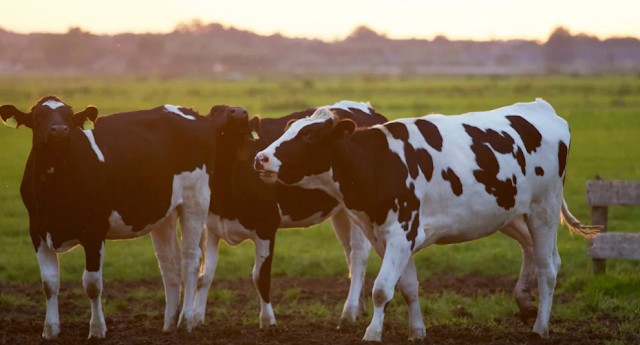
Obesity is an epidemic in many countries, including America, resulting from a lack of exercise and poor diet. Commonly, people are happier when they exercise and eat right, not to mention their vitals (BP, HR, etc.) change to more desirable values. This logic applies to household pets as well; dogs are happier and healthier when sufficiently walked and fed appropriately. Therefore, it is safe to assume that livestock, such as cows, would also be happier when provided with a medium for exercise. However, cows are naturally dormant animals that enjoying grazing and relaxing. Commonly, farmers, whether dairy or cattle, arrange drinking water for the cows far away from their food, thereby forcing the cows to walk. However, this requires a large plot of land that could be utilized in other ways. Large animal veterinarian, Arlan Smith, realized that animal husbandry costs may be reduced by providing a treadmill shaped to accommodate a cow. He claims that a variety of bovine probl...

Bike Washing Machine

Image
Image of the Bike Washing Machine  Balance between a patentable idea and market viability can be difficult to navigate.  Market demand may simply not exist for an idea, no matter how novel or ingenious.  On the other hand, simple modifications to well-known ideas can be very lucrative, while narrow in patent scope or not patentable at all. Enter the bike washing machine, which from its name can be one of two things: a washing machine for bikes (akin to a car wash) or a washing machine for clothes combined with a bike.  The bike washing machine is the latter, and features a drum located where a front wheel of a bike would ordinarily be.  The drum comprises water hook ups for admitting and expelling water.  The patent KR 2011/0003822A, can be found here .  Even more interesting, based on the fact that such patents even exist, are the references used during prosecution.  Two patents of interest include a “Combined bodybuilding energy-savin...

Making Every Cocktail Neat and Perfect

Image
Learning cocktail making, as with many hobbies, has an inherent barrier to novices guarded by vexing terminology. What does it mean to “muddle” something? Is a “dash” the same amount as a “splash?” How can a cocktail be “dry?” Combined with an array of intimidating contraptions and an overwhelming abundance of complex, multistep recipes, it may be tempting to head out to the bar and put home mixology on the rocks. Somabar® and other companies are seeking to change that. In the age of instant and facile domestic comfort led by smart home technologies, one patentable space remains sparse – the automated home cocktail maker. As can be surmised by anyone who has been to a novelty robot bar, automated cocktail making is known. For example, Smart Bar USA claims to market “the world’s first patented touch-screen bar and automated cocktail dispenser” (see U.S. Patent No. 8,584,900, wherein the inventors recognize “a lack of the ability to provide mixed alcohol drinks” via the beverage d...

Lessons from the “Nut Wizard”

Image
Inventions are often born out of a desire to improve upon current market products. If this is the case with your invention, clearly pointing out prior art that your invention has improvements over is useful information to include in a patent application. One example of a patent application that includes discussion of prior art is for the “Nut Wizard” (U.S. Pat. No. 6,460,249 B1), a rolling basket with a handle that is used to pick nuts and fruit off of the ground. The patent application for the “Nut Wizard” does a great job of emphasizing improvements made over other devices in the same space. For example, the “Nut Wizard” application points out how U.S. Pat. Nos. 3,215,293 and 3,604,190 includes axles that run through a basket, which may be difficult and expensive to produce. Then, to clearly contrast this prior art, the “Nut Wizard” application explains features that make it simple and inexpensive to construct.    Pointing out disadvantages in prior art and how you...

ICE, ICE GENIE OR WIZARD OR…?

Image
A previous post described the strategic importance of pursuing patent protection. Therein, the Scrub Daddy served as an excellent example, where Aaron Krause pursued a design patent application during the infancy of his business likely due to money being diverted to the marketing and manufacture of his sponge.  This decision allowed him to secure a $200,000 offer on Shark Tank and grow his business into a multi-million dollar company.             Herein, we provide an example of an ice maker which goes by a variety of names, including Ice Genie and Ice Wizard.  While both names are magical, the landscape in which they are selling these ice makers is not.  Searching Ice Genie in Amazon reveals many similar looking products providing the same features.  Not to mention, Ice Genie and Ice Wizard do not appear to be owned by the same company, while the product offered is the same.      ...

The Importance of Pursuing Patents, even when money is tight

Image
            Household staples are often overlooked as materials which can be improved upon.  Consumers typically use their dish racks, knife blocks, mops, and dish rags without further consideration.  However, Aaron Krause, founder of Scrub Daddy, created a multi-million dollar company by hand-washing his dishes and adding a smile to the sponge.             Scrub Daddy has burgeoned into a wildly successful company, which may be in large part to Krause’s patent pursuits.  His first patent pursuit included a design patent (USD671515S1) filed in 2007, five years before he appeared on Shark Tank.  The benefits of the design patent include its lower cost compared to a utility patent but potentially shorter shelf-life (15 years).  In hindsight, this was a brilliant way for Krause to affordably protect the Scrub Daddy while suiting potential investors.  Kr...

Surprising Uses for Oobleck

Image
Oobleck is a common name for a non-Newtonian fluid comprising cornstarch and water. Named after a substance humorously described in Dr. Seuss’s classic children’s story, Bartholomew and the Ooblek, the cornstarch and water concoction is frequently used in children’s science classes as a fun way to learn about fluid mechanics. You may have fond memories, yourself, of playing with oobleck as a youth. Oobleck behaves as a fluid when touched gently, but becomes hard as a solid when hit with great velocity. For example, a person could run across a swimming pool of oobleck without getting their feet wet. However, if a person stood still on the oobleck, then they would slowly sink. Because oobleck is a children’s plaything and because of its simple recipe (cornstarch and water), one may be surprised to learn that inventors have attempted to patent serious industrial uses for the material. As an example, one current patent application, US 2015/0016885 (now abandoned), is for a system of fi...

An Industrious Solution To An Industrial Problem

Image
The term “heavy industry” conjures images such as construction equipment and materials for building various structures such as bridges, hotels, skyscrapers, etc.  Thus, of course one aspect of intellectual property related to heavy industry encompasses the development of, and improvements upon, various types of equipment related to the construction of such structures.  However, another aspect to the heavy industry market includes upkeep of such structures, once they are constructed. Toward that end, there is currently an upswing in activity in terms of obtaining patent protection for “smart” buildings, homes, bridges, etc., which may rely on network-connected sensors capable of providing real-time data pertaining to various aspects of maintenance of large structures.  However, such solutions are inherently complex, have issues related to divided infringement, and the IP space for such solutions is growing increasingly crowded.        ...

Unplugging the Solid-Body Guitar

Image
Guitars are one of the most commonly used instruments in modern music, evolving from ancient stringed instruments.  The basic principle of how these instruments work has remained the same: as guitar strings vibrate, they produce sound.  An acoustic guitar amplifies the sound of the strings via a soundboard (the top surface of the acoustic guitar body) and a sound box (a hollow cavity within the acoustic guitar body).  The first electric guitar was patented in 1937 ( US 2,089,171 ), which arguably transformed not only the guitar, but music as we know it.  Electric guitars use a pickup to convert the string vibrations into electrical signals, which can be amplified and projected over a speaker.  Because electricity is used to amplify the sound of the electric guitar (and not the guitar itself), modern electric guitars typically lack a soundboard and a sound box, allowing them to have a thin, solid body, which makes them more comfortable to play. For many ye...

Can you Trademark a Functional Product Configuration? Part I

Image
In re Change Wind Corp Change Wind Corp.'s CWC 36kW Wind Turbine In a precedential Board opinion ( here ), the USPTO has refused registration of a wind turbine product configuration application by Change Wind Corporation. Change Wind promotes “revolutionary” new wind turbine design that purportedly generates up to 400% more power than competitive designs at a fraction of the cost.  As part of their Intellectual Property strategy, Change Wind sought protection for the design as a product configuration trademark, asserting that the mark consisted of a “three-dimensional configuration of a wind powered turbine for generating electricity featuring four vertically extending turbine wings that are obliquely curved in a twisting manner and spaced from and relative to a vertically extending cylindrical base that tapers at its upper end into [sic] truncated cone with the turbine wings extending from a [sic] elevation beneath that of the truncation of the truncated cone to an elevatio...