Posts

Showing posts with the label Science

Cobots And Value Added Tasks

Image
Collaborative robots (cobots) are designed to be easy to program and re-program, easily move between one facility location and another, and have a low upfront cost.  They are designed to work with, not replace humans.  At last week’s Coffee with Cobots, commercialization and partnership expert David McFeeters-Krone, in partnership with Oregon and Washington’s Manufacturers Extension Partnership programs and Bill Smart of Oregon State discussed the application of cobots to help expand the workforce and service the unmet needs created by the expected 2 million unfilled manufacturing job vacancies expected over the next ten years.  In under a minute, it was possible to program the cobots available at the meeting to execute simple tasks.  Oregon State has a charter to help local industry and is available to partner with local industries to establish a proof of concept for the use of these robots.  Do you have dangerous, dirty, dull or hard tasks at your facility? C...

Reefer Madness

Image
The burgeoning marijuana industry is witnessing incredible growth as the previously forbidden fruit becomes legal in an increasing number of states.  While the public is quick to adopt its legalization, other sectors are slow to adapt and the USPTO is no exception.               Early internet patents predicting various ways in which the internet would be used are now viewed as overly broad and the USPTO has swung the pendulum in the opposite direction (hello Section 101 rejections). Marijuana patents appear to be in a similar phase; it’s hard to say what is overly broad for a new product.  However, unlike the internet, marijuana has been known and tested, with many experiments occurring in the last century.  This presents an interesting issue - companies may patent previously known compositions, strands, and the like with little consequence, for now, as documentation of marijuana experimentation was ...

Elementary, my dear examiner!

Image
In the current MPEP guidelines for assessing patentability under 35 U.S.C. 101, there are listed four categories of judicial exceptions: i) abstract ideas; ii) laws of nature; iii) natural phenomena; and iv) natural products. Thus, for pedagogical example, one might discount numerical counting under category (i),  the laws of thermodynamics under category (ii), lightning under category (iii), and the chemical elements under category (iv). Actually, about that last case. Not every chemical element is a natural product. Only 90 of the 118 known elements occur in appreciable amounts in nature. The rest are, by and large, artificially synthesized. Where, then, is the judicial exception in obtaining patents for the remaining 28? This was the question that Glenn T. Seaborg and the Atomic Energy Commission posed to the Patent Office over 50 years ago. Indeed, when the Office rejected Seaborg’s patent applications for americium (element 95) and curium (element 96), ...

Agribots Coming to a Farm Near You

Image
Pretty soon you may be getting your food lovingly grown by an agribot. Right now there is a boom in robotic development, and companies have been zeroing in their attention on agriculture to solve some big problems.    For example, in Japan Spread Co. has developed a techno farm concept, which is essentially a smart greenhouse with robots carrying out the bulk of the heavy labor. The indoor environment of Spread Co.’s techno farm allows for micro-climate control for ideal growing conditions, and the vertical arrangement of the techno farm’s crops is extremely space efficient. Further, Spread Co.’s techno farm solves some pretty big farming challenges in Japan, as Japan has an aging population that may not be able to carry-out traditional farming practices and is an island with limited land for agriculture.             Or, just this March, Walmart filed a patent for a robotic bee that pollinates crops, which may help t...

Snails Get the Spa Treatment

Image
Snail mucin has been having a moment in skin products over the last couple of years thanks to its awesome hydrating benefits. With the uptick in demand for snail mucin though, where are companies getting all of the slime from? Turns out, specialized collection devices have been developed to assist snail farmers in harvesting snail mucin. As just one example, European Application Number EP20160202140 is a patent application to a specialized device for snail mucin production and collection.             The device of EP20160202140 has an enclosed chamber with a basket inside, and the snails are placed in the basket and washed. Then, the collection device creates a spa-like environment, referred to as a “sauna”, using a special solution in the chamber (e.g., stimulating solution, sterilized water or ozonated water). The snail sauna, which is not so hot as to harm the snails, triggers the snails to produce slime. The slime is then collected and much of it is ...

Large-scale scientific experiments and the need for more exemptionslike the Hatch-Waxman exception in Patent Law

Image
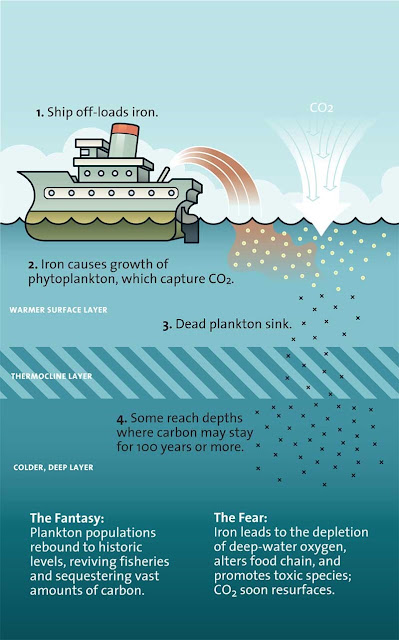
Oceanography is a fascinating field of study, encompassing knowledge from a variety of scientific and engineering disciplines.  Notable pioneering efforts in oceanography have been recognized from countries across the globe although tribute must be given to the great Jacques Cousteau for the popularization of oceanography in the eyes of the general public.  His books, films, and conservation efforts have revealed the wonders of the oceans for countless children and adults alike. In the 1980s, John Martin’s seminal work out of Woods Hole Oceanographic Institute fueled the idea of seeding algal blooms with iron, aka iron fertilization, into becoming a feasible solution to the issue of rising atmospheric carbon dioxide (CO2) levels.  The results of his studies on mapping the oceanic distribution of nutrients essential for algal proliferation confirmed the presence of large regions that are low in iron levels with respect to macronutrients such as nitrate, phosphate, and sil...

Patent Trends in the Renewable Energy Sector

Image
Has innovation in renewable energy been slowing down? Patents are a unique indicator for technology development.  They are one of the most accurate and timely resources for estimating the trend of development in a technical field. Global warming and environmental pollution call for clean technology to provide affordable alternative energy sources, as well as reduced carbon emission.  There is speculation that the drastic policy changes of the Trump administration and Congress might reduce innovation in cleantech, which could be evidenced by the decreased number of cleantech patents granted by the USPTO since 2014. Since the patent filing process generally experiences a time lag of around two years, the drop in the number of granted patents is more likely the result of a decreased number of patents filed around 2012-2013.  IRENA (International Renewable Energy Agency) data shows that 28,282 renewable energy patents were filed in the U.S. in 2012, while 18,311 were f...