Posts

MasterCraft and Malibu Boats - Wakesurfing patent dispute

Image
MasterCraft and Malibu Boats may have finally settled their long-running feud over wake-surfing patents, but there is still a lot of interesting information to be had in looking into the patent cases related to the action. The first aspect to note in the feud is that Malibu Boats did not have just a single patent at issue, but rather Malibu Boats was working on a portfolio. As sophisticated IP players know, the real goods are a well developed patent portfolio as it significantly increases one’s leverage against a competitor. Today we review one aspect of Malibu’s strategy in the case to drive settlement - the idea of a pending application. One might think a pending application is useless as it cannot be asserted in litigation (since the patent has not yet issued). But of course the value in a pending application is not whether it can be asserted immediately, but rather that it has the ability to change and can be asserted at some unknown point in the future. One of Malibu’s pe...

Skim Milk

Image
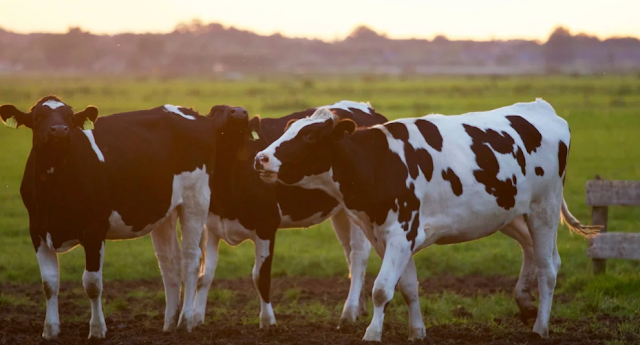
Obesity is an epidemic in many countries, including America, resulting from a lack of exercise and poor diet. Commonly, people are happier when they exercise and eat right, not to mention their vitals (BP, HR, etc.) change to more desirable values. This logic applies to household pets as well; dogs are happier and healthier when sufficiently walked and fed appropriately. Therefore, it is safe to assume that livestock, such as cows, would also be happier when provided with a medium for exercise. However, cows are naturally dormant animals that enjoying grazing and relaxing. Commonly, farmers, whether dairy or cattle, arrange drinking water for the cows far away from their food, thereby forcing the cows to walk. However, this requires a large plot of land that could be utilized in other ways. Large animal veterinarian, Arlan Smith, realized that animal husbandry costs may be reduced by providing a treadmill shaped to accommodate a cow. He claims that a variety of bovine probl...

Bike Washing Machine

Image
Image of the Bike Washing Machine  Balance between a patentable idea and market viability can be difficult to navigate.  Market demand may simply not exist for an idea, no matter how novel or ingenious.  On the other hand, simple modifications to well-known ideas can be very lucrative, while narrow in patent scope or not patentable at all. Enter the bike washing machine, which from its name can be one of two things: a washing machine for bikes (akin to a car wash) or a washing machine for clothes combined with a bike.  The bike washing machine is the latter, and features a drum located where a front wheel of a bike would ordinarily be.  The drum comprises water hook ups for admitting and expelling water.  The patent KR 2011/0003822A, can be found here .  Even more interesting, based on the fact that such patents even exist, are the references used during prosecution.  Two patents of interest include a “Combined bodybuilding energy-savin...

Filing Third Party Observations

Image
Third-party or preissuance submissions are a tool for third parties to submit patents, published patent applications, or other non-patent literature that may be of potential relevance to the examination of a patent application. The U.S. Patent and Trademark Office’s Third-Party Submission Program has been available since September 2012, but has not been frequently used, though the USPTO considers third party submissions to be a valuable tool, as examiners are motivated to apply the best prior art available to make a rejection, regardless of who found the prior art.  However, current U.S. law limits when a preissuance submission can be filed, and thus the owner of the subject patent application is free to work with the U.S. examiner to overcome any submitted references, and the third party cannot participate in the ongoing prosecution. Regardless, third-party submissions can be useful in disrupting the prosecution of competitors’ patents. In regards to filing the submission...

Steamboat Willie and the Impact of Trademarks on Public Domain Film

Image
On January 1, 2019, for the first time in over 20 years, works published in the United States will fall into the public domain due to copyright term expiration.  After the passage of the 1998 Copyright Term Extension Act (CTEA), copyright on works published before January 1, 1978 was granted a 20-year extension, increasing the term of copyright from 75 to 95 years.  Though all works published in the United States prior to December 31, 1922 were already in the public domain, those scheduled to be admitted on January 1, 1999 (i.e., all U.S. works published in 1923) were to remain bound by copyright protections for another 20 years.             The CTEA generated controversy during its development, as major media conglomerates, most memorably The Walt Disney Company, had been lobbying for nearly a decade to extend copyright protections.  As a result, the CTEA was derisively referred to as the “Mickey Mouse Protectio...

Making Every Cocktail Neat and Perfect

Image
Learning cocktail making, as with many hobbies, has an inherent barrier to novices guarded by vexing terminology. What does it mean to “muddle” something? Is a “dash” the same amount as a “splash?” How can a cocktail be “dry?” Combined with an array of intimidating contraptions and an overwhelming abundance of complex, multistep recipes, it may be tempting to head out to the bar and put home mixology on the rocks. Somabar® and other companies are seeking to change that. In the age of instant and facile domestic comfort led by smart home technologies, one patentable space remains sparse – the automated home cocktail maker. As can be surmised by anyone who has been to a novelty robot bar, automated cocktail making is known. For example, Smart Bar USA claims to market “the world’s first patented touch-screen bar and automated cocktail dispenser” (see U.S. Patent No. 8,584,900, wherein the inventors recognize “a lack of the ability to provide mixed alcohol drinks” via the beverage d...

Precision Farming and Intellectual Property

Image
With all of the intellectual property buzz around self-driving cars and blockchain, those looking for new breakthrough concepts might consider adjacent technologies that typically do not receive the same media attention. One of those areas that shows great promise is precision farming. Precision farming is at the cross-roads of numerous engineering disciplines, including artificial intelligence, e-commerce, mechanical engineering, genetic engineering, control systems, drones, and more. Farms are a business and rely on technology for everything from improved seeds to determining how and when to harvest to pest control. Many of the recent patent filings in this field of technology originate from China. Given that so many Chinese inventors have recognized the value in this field, it may be fertile ground for start-ups if they can get their concepts on file at the patent offices in time.